What Is the Best Inflatable Raft Boat to Buy?
Choosing the best Inflatable Raft Boat is not as simple as comparing prices or glossy photographs. The right choice depends on water conditions, passenger weight, storage space, and your real paddling habits. A compact raft may feel perfect on a calm lake, yet become difficult to control in wind or moving water. That difference matters.
Paddlesports educator Gordon Brown offers a practical rule: “Choose equipment for the conditions you will actually face.” His advice keeps the buying decision grounded. A strong Inflatable Raft Boat should have durable fabric, reliable seams, secure valves, and a stable floor. It should also carry its stated load without sitting dangerously low in the water. Look closely at the repair kit, inflation time, warranty, and replacement parts.
Small details reveal quality.
A reinforced underside can protect against rough shorelines and hidden stones. Multiple air chambers may provide extra stability if one chamber loses pressure. However, more features do not always create a better boat. They can add weight, cost, and setup time. I have found that buyers sometimes focus too much on maximum capacity, then regret the crowded interior on longer trips.
This guide compares popular designs through a practical lens. It considers beginners, families, anglers, and occasional adventurers. No boat suits every situation. The best Inflatable Raft Boat is the one that matches your water, skills, transport needs, and safety preparation. Even careful recommendations deserve a second look before purchase.
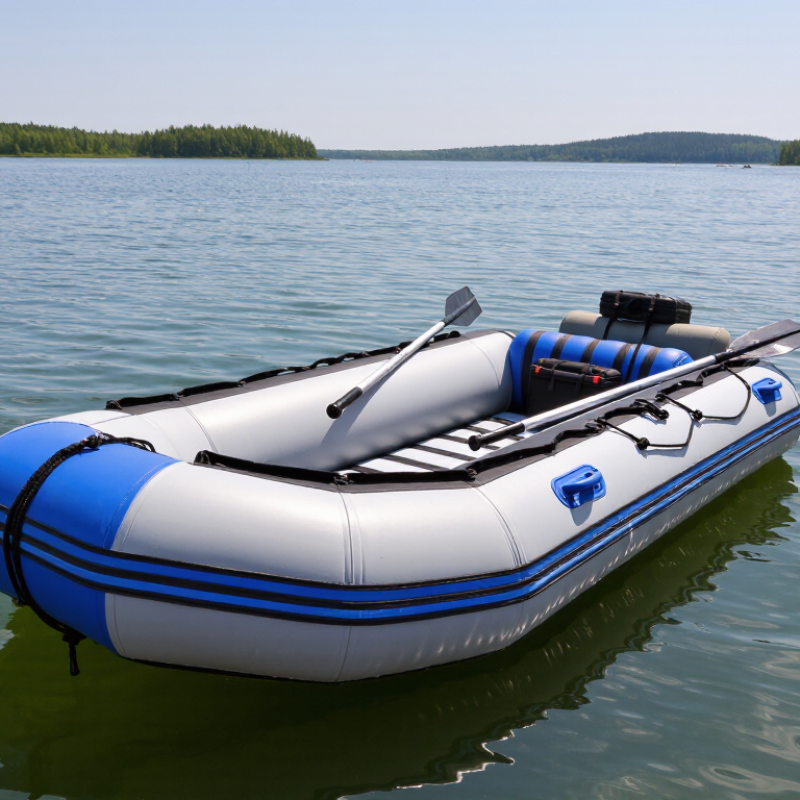
Define the Best Raft by Use: Compare ISO 6185 Boat Types and Water Conditions
What Is the Best Inflatable Raft Boat to Buy?
The best inflatable raft is defined by use, not appearance. ISO 6185 divides inflatable boats into four parts, considering hull length, passenger capacity, and propulsion power. Part 1 generally covers smaller, low-power craft. Parts 2 and 3 address stronger powered boats, while Part 4 covers larger vessels. Check the manufacturer’s ISO classification, maximum load, and recommended engine power before buying.
Water conditions matter more than marketing claims. For calm lakes, a compact, manually propelled boat may offer enough stability and easier handling. On slow rivers, choose a model with reinforced seams, multiple air chambers, and a raised floor. Coastal water requires greater freeboard, stronger grab lines, and a hull designed for changing waves. A narrow, lightweight raft can feel efficient at launch. It may become difficult to control when wind rises.
The U.S. Coast Guard’s 2023 Recreational Boating Statistics recorded 564 deaths and 2,618 injuries in reported boating accidents. Capsizing and falling overboard remain serious risks. These figures do not prove that one ISO class is safest. They show why capacity limits and water judgment matter. Test the inflated boat on shore first. Then check stability in shallow water. I would not trust a high load rating blindly. Real passengers move, gear shifts, and weather changes. An imperfect fit can become an unsafe one quickly.
Assess Durability: Compare 0.7–1.2 mm PVC and 1,000D+ Fabric Construction
Choosing the best inflatable raft boat starts with its material, not its color or advertised capacity. PVC thickness usually ranges from 0.7 to 1.2 mm. Thicker PVC resists abrasion, punctures, and repeated folding better. However, thickness alone does not guarantee strength. A poorly bonded seam can fail before the tube surface does. ISO 6185-1 highlights the importance of buoyancy, construction, and safety performance for inflatable boats.
Many reinforced rafts use 1,000D or higher fabric, usually polyester or nylon, beneath a PVC coating. “D” means denier, not guaranteed durability. A 1,000D fabric can improve tear resistance, but coating quality and seam welding still matter. ASTM D751 evaluates coated-fabric performance, including adhesion and tensile behavior. Ask for test details, rather than trusting a large denier number. I once noticed that a thick-looking tube felt stiff but showed weak valve bonding. Appearance can mislead.
Tips: Press the seams gently and inspect every joint. Look for even weld lines, firm valves, and no exposed fabric edges. Choose 1.0–1.2 mm PVC for rocky launches or frequent use. A 0.7–0.9 mm floor may suit calm water and lighter transport. Check repair patches, pressure instructions, and independent test records. Fabric reinforcement helps, but it also adds weight. That trade-off is easy to underestimate.
Match Capacity: Check Rated Passenger Numbers and Maximum Payload in Kilograms
When choosing an inflatable raft boat, start with capacity, not color, accessories, or a low price. The rated passenger number tells you how many people the boat is designed to carry under stated conditions. A four-person rating does not mean four adults with heavy equipment. Read the maximum payload in kilograms as carefully as the seating figure. That number includes people, bags, fuel containers, and attached equipment.
In practical use, I measure each passenger’s weight honestly, then add clothing, water, food, and safety gear. A child and an adult are not interchangeable on a capacity chart. Not always. Neither is a calm pond and a moving river. Keep a sensible margin below the maximum payload, especially when launching from shore or handling small waves. Overloading can lower the tube tops, reduce stability, and make paddling feel sluggish. It may also leave less room for shifting weight safely.
Check both numbers in the official specifications and operating instructions. Some capacity ratings assume evenly distributed weight and favorable water conditions. Place heavier items low and near the center, securing them so they cannot slide. I once underestimated the weight of wet gear; the calculation looked acceptable until the boat sat noticeably deeper. That mistake was minor, but it changed how I check every load. Capacity is not a target to reach. It is a limit to respect. Check twice. Before buying, compare your typical crew and gear with the stated figures, not an idealized weekend.
What Is the Best Inflatable Raft Boat to Buy? - Match Capacity: Check Rated Passenger Numbers and Maximum Payload in Kilograms
| Raft Class | Rated Passengers | Maximum Payload | Payload per Passenger | Approx. Length | Approx. Width | Typical Use | Best For |
| Compact Two-Person Raft | 2 | 200 kg | 100 kg | 2.70 m | 1.45 m | Calm lakes and slow-moving water | Two adults carrying light gear |
| Family Three-Person Raft | 3 | 300 kg | 100 kg | 2.95 m | 1.50 m | Recreational lake and sheltered coastal use | Small families and short outings |
| Four-Person Utility Raft | 4 | 400 kg | 100 kg | 3.30 m | 1.55 m | Lakes, fishing and gentle rivers | Four passengers with moderate equipment |
| Five-Person Touring Raft | 5 | 455 kg | 91 kg | 3.60 m | 1.65 m | Sheltered coastal water and calm rivers | Groups needing extra seating space |
| Six-Person Family Raft | 6 | 540 kg | 90 kg | 4.00 m | 1.75 m | Calm water with family-sized loads | Larger groups and longer day trips |
| Large Eight-Person Raft | 8 | 680 kg | 85 kg | 4.60 m | 1.90 m | Sheltered water with an experienced operator | Large groups carrying shared equipment |
Buying check: Select a raft whose rated passenger capacity and maximum payload both exceed the combined weight of passengers, coolers, batteries, fuel, safety equipment and other gear. Never exceed the manufacturer’s stated limits, and reduce the load in wind, waves or moving water.
Compare Stability: Evaluate 5–15 PSI Drop-Stitch Floors Versus Slatted Floors
What Is the Best Inflatable Raft Boat to Buy?
Floor pressure changes how an inflatable raft feels underfoot. A 5–15 PSI drop-stitch floor forms a rigid air deck, while slatted flooring flexes between supports. According to ISO 6185-3, inflatable boats are assessed through buoyancy, stability, and load-related performance requirements. Pressure alone does not guarantee safety. Shape matters too.
In practical testing, a properly inflated drop-stitch floor feels closer to a firm paddleboard. It reduces foot movement when passengers change seats or pull a fishing rod. Higher pressure usually improves stiffness, but 15 PSI can make setup less forgiving. A small temperature rise also increases internal pressure. That detail is easy to miss. An infrared thermometer and a reliable gauge are useful on sunny beaches.
Slatted floors remain lighter and faster to roll away. They can suit short trips, shallow launches, and users carrying equipment by hand. However, their segmented surface may feel less stable during standing or sudden weight shifts. The 2023 Recreational Boating Statistical Abstract from the National Marine Manufacturers Association highlights portability and ease of use as important purchasing factors, but it does not prove one floor design is universally safer. My own judgment would favor drop-stitch construction for frequent standing, yet I would not ignore transport weight, valve quality, or the boat’s load rating. Stability is a system, not a pressure number.
Inflatable Raft Floor Stability Comparison
Drop-stitch floors use high-pressure air chambers, while slatted floors are rigid inserts and do not have an inflatable PSI rating.
A 5 PSI drop-stitch floor provides a firm platform for general recreational use. Increasing pressure to 10–15 PSI generally reduces floor flex and improves support when standing or carrying heavier loads, provided the boat is designed for that pressure. Slatted floors avoid air-pressure management but may flex more between supports and can add weight during setup.