
Choosing the best Window Awnings begins with one practical question: where does unwanted sunlight enter?
The U.S. Department of Energy reports that exterior awnings can reduce solar heat gain by up to 65% on south-facing windows. West-facing windows may see reductions of up to 77%. These figures come from controlled guidance, not every home. Climate, fabric openness, window glass, and installation angle change the result. The International Energy Agency also identifies building operations as a major global energy demand, making passive shading worth closer attention.
Building scientist Dr. Joseph Lstiburek explains, “Exterior shading works best because it stops solar heat before the glass absorbs it.” That principle makes a visible difference. A correctly sized awning can keep a sunny living room cooler, reduce glare on a laptop, and protect wooden flooring near the glass. Small details matter.
Not every awning performs equally well. Retractable models offer flexible control, while fixed awnings provide more consistent shade. Mesh fabrics can preserve outdoor views, but tighter fabrics usually block more light. Wind exposure also matters. A lightweight model may suit a sheltered patio, yet fail on an exposed upper floor.
This comparison will examine fabric performance, frame strength, projection depth, motor options, maintenance, and installation quality. It will also question popular assumptions. A darker awning is not automatically better. A larger awning is not always smarter. The best choice depends on orientation, weather, window size, and daily habits. That sounds obvious, but buyers often overlook it.
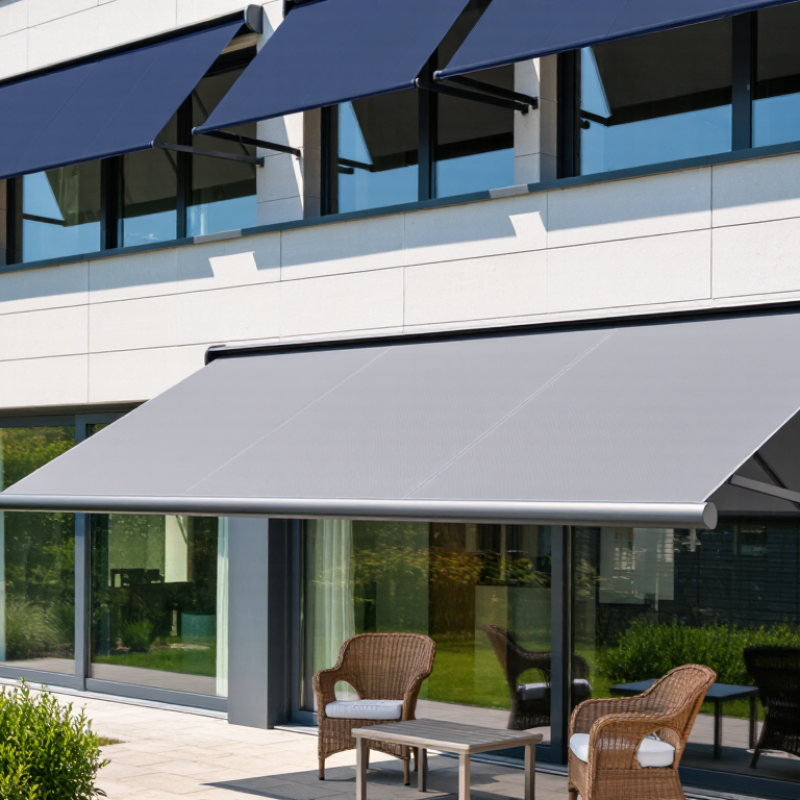
Window awnings differ mainly in structure, movement, fabric, and weather control. Fixed awnings provide constant shade and need little maintenance. They suit windows facing strong afternoon sunlight.
Retractable awnings offer more flexibility. You can extend them during hot hours and retract them during storms. Manual crank systems cost less, while motorized models improve daily convenience. However, motors require wiring, controls, and occasional servicing.
Fabric awnings feel lighter and offer many color choices. Acrylic-coated fabrics usually resist moisture, fading, and mildew better than untreated textiles. Aluminum or steel awnings provide stronger impact resistance, but they can transfer heat and create rain noise.
Drop-arm and vertical-drop designs block low-angle sunlight more effectively. Hood-style awnings also protect the upper window frame from rain. Check the frame, mounting surface, wind rating, and drainage path before buying.
The U.S. Department of Energy reports that awnings can reduce summer solar heat gain by up to 65% on south-facing windows. The reduction can reach 77% on west-facing windows.
These figures come from controlled guidance, not every home. Local orientation, glass type, fabric openness, and installation quality change performance. I would not treat the number as a guarantee.
NFRC guidance also shows why solar heat gain coefficient matters when comparing window systems. In practice, measure the glass area first. Then choose shade depth based on seasonal sun angles. A small mistake there can leave bright heat on the sill.
What Are the Best Window Awnings to Buy?
How to Choose the Right Awning Material and Design
The best window awning depends on your climate, wall type, and daily sunlight. Start by measuring the window width, height, and desired projection. A small mistake here can leave glass partly exposed or create awkward drainage. For strong sun, solution-dyed acrylic fabric offers good color retention and breathability. Coated polyester usually costs less, but it may fade or stiffen sooner. Aluminum provides durable shade and resists moisture, although it can transfer heat without suitable insulation.
Think about how the awning will operate. A retractable design gives flexible control, especially near patios or frequently opened windows. A fixed canopy needs less attention but can block winter sunlight. Check the pitch carefully. A steeper angle sheds rain better. It can also make the installation look heavier. That trade-off is easy to overlook.
Material is only part of the decision. Look for rust-resistant brackets, secure fasteners, and a frame rated for your local wind conditions. Motorized models are convenient, but manual systems can be simpler to repair. Keep fabric clear of sharp edges and inspect seams after storms. No awning lasts forever. I would avoid choosing only by appearance, because a beautiful canopy may provide weak heat control. Ask for fabric performance data, installation instructions, and maintenance requirements. A qualified installer should assess the wall structure before drilling, especially on older masonry or insulated façades.
Typical service life varies by material, climate, cleaning, installation quality, and exposure to wind and moisture. Use these figures as a practical starting point when comparing awning materials.
How to choose: Solution-dyed acrylic is a balanced choice for color retention and everyday sun protection. Polyester is usually more economical but may require earlier replacement. PVC-coated polyester offers strong moisture resistance, while aluminum generally provides the longest service life but has fewer fabric-style design options.
The chart uses midpoint estimates from typical residential service-life ranges; actual performance depends on local weather, operating frequency, maintenance, and installation.
The best window awning starts with accurate measurements, not attractive fabric. Measure the window width, frame depth, and desired projection before purchasing. The awning should shade the glass without blocking ventilation or nearby doors. For west-facing windows, wider coverage matters because afternoon sunlight arrives at a lower angle.
Sun protection deserves careful attention. The U.S. Department of Energy reports that awnings can reduce solar heat gain by up to 65% on south-facing windows and 77% on west-facing windows. These figures depend on fabric color, projection, window orientation, and installation quality. The U.S. Energy Information Administration’s 2020 Residential Energy Consumption Survey also identifies air conditioning as a major household electricity use. Awnings may help, but they are not a complete cooling strategy. Sometimes expectations run ahead of evidence.
Weather resistance depends on more than a “waterproof” label. Choose corrosion-resistant hardware, UV-stabilized fabric, reinforced seams, and secure wall attachment. ASTM G154 is commonly used to evaluate accelerated ultraviolet exposure, yet laboratory testing cannot guarantee a specific outdoor lifespan. Retract the awning during strong winds, heavy snow, or severe storms. Inspect brackets and seams twice yearly. Rinse dust with clean water, avoid aggressive pressure washing, and allow fabric to dry fully before retracting. Small maintenance tasks prevent expensive repairs.
Manual, motorized, and smart window awnings solve different problems. Manual awnings are simple, quiet, and usually easier to repair. A hand crank also works during power cuts. However, frequent adjustment becomes inconvenient when afternoon sun moves across several windows. The U.S. Department of Energy’s Energy Saver guidance reports that awnings can reduce summer solar heat gain by up to 65% on south-facing windows and 77% on west-facing windows. Placement matters more than appearance.
Motorized awnings suit large windows, upper floors, and households needing easier daily control. A wall switch or remote can retract fabric before strong wind arrives. Smart awnings add sensors for sunlight, temperature, and weather. They may reduce cooling demand by reacting faster than people. The International Energy Agency’s The Future of Cooling report warns that global cooling demand could more than triple by 2050 without efficiency improvements. Exterior shading is a practical response, but it is not a complete energy strategy.
Smart control is not automatically better. Sensors need accurate positioning, stable power, and occasional maintenance. I would test the manual override before buying. A basic motorized model may outperform a complicated system in a rental or rarely used room. Fabric color, projection depth, window direction, and local wind exposure deserve equal attention. Small details decide comfort.
What Are the Best Window Awnings to Buy?
Installation cost depends on window size, wall material, access, and awning operation. In many markets, fitting one standard awning costs about $150 to $600, excluding the product. Motorized models usually require electrical work, which raises labor charges. Ask for a written quote covering brackets, sealing, removal, and cleanup. An experienced installer should inspect brick, siding, or concrete before drilling. A cheap quote may hide difficult access or weak fixing points.
Lifespan depends heavily on fabric quality, frame protection, and weather exposure. Powder-coated aluminum frames commonly last 10 to 20 years with basic care. Acrylic or solution-dyed fabrics may remain useful for 8 to 12 years. Harsh sunlight, coastal salt, and strong wind shorten those figures. Inspect seams, joints, and mounting bolts each spring. Keep the fabric dry before retracting it. Small tears become expensive problems.
Buying decisions should match the window’s direction and daily use. A south-facing window may need deeper coverage than a shaded north-facing opening. Measure the glass, wall clearance, and nearby doors carefully. Wind sensors improve convenience, but they also add maintenance points. Look for clear fabric specifications, spare-part availability, and a realistic warranty. My rough first estimate would probably ignore installation surprises. That is why a second site assessment is worth the time. Consider repair access, not just appearance.
Ontario launching new 12-year rebate program