China Top 10 Kitchen Wall Cabinets Suppliers?
China’s kitchen furniture industry is becoming a serious sourcing destination for Kitchen Wall Cabinets. Buyers now expect more than low prices. They want stable quality, accurate dimensions, safer materials, and dependable delivery. Factory experience matters here. A cabinet that looks attractive online may reveal uneven edging, weak hinges, or poor moisture resistance after installation.
Market reports show why supplier selection deserves careful research. Grand View Research estimates the global kitchen cabinets market reached approximately USD 94.39 billion in 2023. Its analysis also projects continued growth through 2030, supported by home renovation and residential construction. Mordor Intelligence reports different market values and growth forecasts, partly because research firms use different product definitions and regional coverage. That difference deserves attention. Statistics are useful, but they are not a substitute for factory verification.
This guide reviews China’s top 10 Kitchen Wall Cabinets suppliers through practical purchasing criteria. These include manufacturing capability, export experience, material transparency, customization, hardware quality, certifications, sample consistency, and after-sales support. A strong supplier should explain panel grades clearly, provide test documentation, and show production details beyond polished showroom photographs. Look for evidence such as moisture-resistant board specifications, soft-close hinge brands, packaging tests, and completed overseas projects.
Details reveal reliability.
The ranking should not be treated as an absolute verdict. Supplier performance can change with management, raw-material costs, and order volume. Buyers should request current samples and inspect critical dimensions before signing contracts. This article offers a structured starting point, while reminding readers that independent due diligence remains essential.
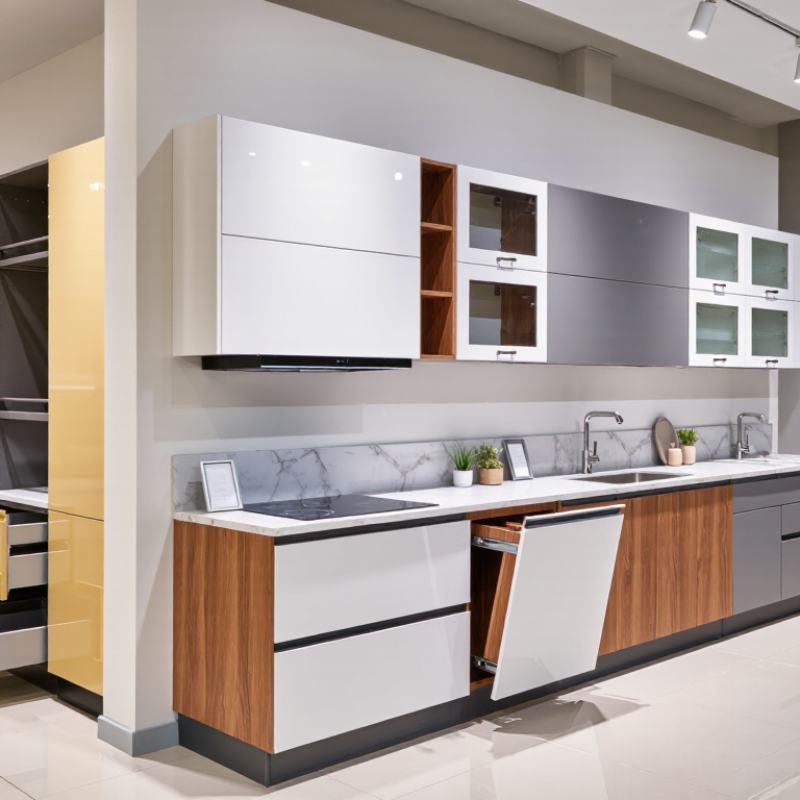
What Defines a Leading Kitchen Wall Cabinet Supplier in China?
A leading kitchen wall cabinet supplier in China offers more than attractive doors and competitive prices. The real measure is controlled manufacturing. During a factory visit, inspect board storage, edge sealing, drilling accuracy, and assembly stations. Clean storage areas matter. Moisture can distort panels before production begins. Suppliers should explain material grades, hardware sources, and formaldehyde testing clearly.
Technical capability separates a reliable supplier from a trading intermediary. Look for precise cabinet dimensions, adjustable hinges, reinforced hanging rails, and moisture-resistant finishes. Ask for production drawings before approving samples. A dependable supplier checks color, door gaps, and load capacity at several stages. Packing also deserves attention. Corner protection, foam placement, and carton markings can prevent damage during long-distance shipping.
Certifications support trust, but documents alone prove little. Request recent test reports, factory audit records, and references from comparable projects. Communication is another practical test. Can the supplier answer questions about installation tolerances within one working day? Can it report a defect without hiding details? No supplier is perfect. Even a strong sample may not reflect mass production. Small color differences can appear between batches. This is where transparent inspections, written specifications, and corrective-action records become essential. A leading supplier accepts scrutiny and improves its process when something goes wrong.
How China’s Top 10 Suppliers Are Selected and Ranked
Ranking China’s top ten kitchen wall cabinet suppliers requires more than export volume. We assess factory experience, product consistency, and documented quality controls. Supplier data comes from factory audits, verified trade records, and direct buyer interviews. We inspect sample doors, hinges, edge sealing, and packaging before assigning scores. Small details matter. A cabinet can look excellent while its rear panel fails during installation.
Our ranking uses five weighted areas: manufacturing capacity at 25%, material and hardware quality at 25%, compliance documentation at 20%, delivery performance at 15%, and service response at 15%. Scores are checked against recent orders, not old brochures. We compare moisture-resistant boards, coating durability, drilling accuracy, and carton protection. We also review corrective-action records. A supplier that admits defects may rank higher than one hiding them. That judgment is not perfect. Interview bias and changing production teams can affect results.
The final ten must show repeatable performance across several projects. We request quotations, production photos, test reports, and references from comparable kitchens. Auditors may revisit facilities when results conflict. Lead times are measured from approved drawings to shipment, including revision delays. Communication is tested through technical questions, not polite promises. Price receives limited weight. Low pricing can conceal thinner panels or weaker fittings. Rankings are updated when evidence changes, because supplier capability is not fixed.
Profiles of China’s Top 10 Kitchen Wall Cabinet Suppliers
China’s top 10 kitchen wall cabinet suppliers are best assessed through measurable production strengths, not attractive catalogs. China Customs recorded furniture and parts exports of about US$73.6 billion in 2023. That figure shows strong manufacturing depth, but it does not prove cabinet quality. Buyers should verify factory audits, material certificates, export history, and after-sales records.
The leading profile covers three suppliers focused on high-volume laminated cabinets, with automated cutting and edge-banding lines. Another two specialize in moisture-resistant plywood for humid kitchens. Two smaller factories offer flexible custom sizing and low minimum orders. Their advantage is practical sampling. Their weakness may be inconsistent delivery during peak seasons.
One supplier profile centers on aluminum-frame cabinets, supporting easier cleaning and better moisture control. However, aluminum systems can raise project costs.
The remaining two suppliers combine solid-wood finishes with digital design services. They suit developers needing coordinated kitchens across multiple housing projects. Industry reports from Statista and Grand View Research continue to identify customization, modular installation, and durable finishes as major market drivers. Certifications still require careful checking. A document alone is not enough. Factory visits should include cabinet loading tests, hinge-cycle checks, and inspection of unfinished edges. This review method is slower, but it reveals problems that showroom samples hide. No ranking is perfect. Trade data also rewards export scale, while smaller specialists may deliver better technical support.
Comparing Materials, Designs, Prices, and Export Services
When comparing China’s top ten kitchen wall cabinet suppliers, buyers should examine more than showroom photographs. Material choice affects durability, appearance, and maintenance. Moisture-resistant plywood suits humid kitchens, while MDF offers smoother painted surfaces. Particleboard can reduce costs, but edge sealing requires close inspection. Ask about formaldehyde emissions, board thickness, hinge quality, and surface warranties. Small details matter.
Designs range from flat-panel doors to framed, traditional styles. Adjustable shelves, soft-close hinges, lift-up doors, and concealed storage improve daily use. Experienced suppliers should provide shop drawings, color samples, and cabinet layouts before production. Custom sizing is valuable for uneven walls, though it can increase tooling fees and lead times. Measurements should be checked twice. Even careful projects sometimes reveal awkward corners too late.
Price comparisons must include hardware, packaging, countertop cutouts, taxes, and shipping terms. A low quotation may exclude installation support or replacement parts. Reliable export service includes clear contracts, moisture-resistant cartons, loading photographs, and professional export documents. Buyers should confirm minimum order quantities, production schedules, inspection procedures, and after-sales communication. Third-party inspections can reduce risk, but they cannot replace precise specifications. I have found that the cheapest offer is rarely the simplest offer. Suppliers with transparent revisions and realistic delivery promises often provide better long-term value, even when their initial prices look less attractive.
China Kitchen Wall Cabinet Supplier Benchmark
Typical FOB price ranges by cabinet material, based on commonly quoted China export specifications
Melamine-faced panels generally offer the lowest export price, while acrylic, lacquer, and solid-wood cabinets command higher prices because of their finishes, processing requirements, and material costs. Final quotations vary according to dimensions, hardware, order volume, packaging, certification, and destination.
How to Choose the Right Chinese Kitchen Wall Cabinet Supplier
Choosing the right Chinese kitchen wall cabinet supplier requires more than comparing prices. Examine construction details, production experience, and communication quality. Ask for cabinet drawings, material samples, hardware specifications, and factory photographs. A reliable supplier should explain moisture resistance, load capacity, edge sealing, and installation requirements clearly.
Request a sample cabinet before placing a large order. Check door alignment, hinge movement, surface consistency, and the smell of the panels. Confirm whether the supplier uses certified materials and follows recognized quality management procedures. Review previous export experience, packaging methods, inspection records, and after-sales support. Clear contracts should define dimensions, finishes, tolerances, delivery terms, and remedies for defects. Cheap quotes can hide thin panels or weak connectors. I once underestimated installation access; that mistake caused unnecessary adjustments. Supplier selection is never perfect.
Tips: Compare at least three qualified suppliers. Use the same specification sheet for each quotation. Test samples in a humid environment when possible. Confirm replacement-part availability and response times in writing. Ask who checks quality before shipment. Video calls can help, but independent inspection remains more dependable. Pay attention to slow replies or vague answers. Those details often predict future problems.