10 Best Doors and Windows Suppliers for Global Buyers?

Choosing reliable doors and windows suppliers can shape a building’s comfort, safety, energy use, and long-term maintenance costs. Global buyers often compare more than product photos. They examine material quality, manufacturing capacity, testing records, warranty terms, and communication speed. A polished catalogue is helpful, but it proves little by itself.

This guide introduces 10 suppliers serving international markets. The selection considers practical factors, including aluminium, uPVC, timber, and thermally broken systems. It also reviews glass options, weather resistance, customization, packaging, and export experience. Buyers should request samples, technical drawings, test reports, and recent project references before signing a contract. Small details matter. A poorly protected corner can arrive damaged after a long shipment.

Regional requirements also deserve careful attention. Fire performance, wind-load ratings, thermal values, glazing standards, and installation methods differ between countries. A supplier experienced in one market may not understand another market’s approval process. That limitation is easy to overlook. Therefore, readers should confirm local building requirements with qualified professionals and independent inspectors.

The suppliers featured here are not presented as perfect choices for every project. Pricing, lead times, service quality, and product availability can change. Some companies may communicate well but offer fewer customization options. Others may provide advanced systems with higher minimum order quantities. A thoughtful comparison should balance performance, budget, delivery risk, and after-sales support. In real procurement, the cheapest quotation rarely tells the whole story. Reliable doors and windows begin with verifiable evidence, clear specifications, and realistic expectations.
10 Best Doors and Windows Suppliers for Global Buyers?

Global Market Scope: Regional Demand, 2024 Growth Data, and Building Codes

The 10 best doors and windows suppliers for global buyers should be judged by regional fit, not catalog size. In 2024, market reports generally indicated moderate global growth, near 4% annually. However, demand differed widely across regions. North America favored energy-efficient replacements and impact-resistant systems. Europe emphasized thermal performance, airtightness, and renovation. Southeast Asia showed stronger interest in affordable aluminum products for urban housing. The Gulf region required solar control, durable finishes, and resistance to extreme heat.

Building codes can change the purchasing decision quickly. European projects may require strict U-values, airtightness testing, and documented sustainability performance. In North America, local rules often address wind loads, fire safety, egress, and hurricane resistance. Australia and coastal markets commonly demand tested water penetration and cyclone performance. A supplier should provide laboratory reports, installation guidance, and traceable material data. Experience matters here. A product can pass a test yet fail because installers misunderstand drainage or flashing.

Tips: Request region-specific certificates, not general brochures. Ask for recent project references. Confirm lead times in writing. Check whether drawings match local code requirements. Small details matter. I once saw a specification approved too early, before checking frame tolerances. That mistake caused site delays and replacement costs. Buyers should also review 2024 price changes carefully, because freight, aluminum, glass, and currency movements can distort apparent growth. Forecasts are useful, but never perfect.

Define “Best” with 10 Metrics: U-Value, Air Leakage, CE, and ISO 9001

The best doors and windows supplier is not defined by price or polished photos. Use ten measurable checks: U-value, solar heat gain coefficient, visible transmittance, air leakage, water penetration, wind-load resistance, acoustic rating, thermal cycling, CE documentation, and ISO 9001 certification. Lower U-value usually means better insulation, while air leakage reveals poor seals more directly. Look for test results under recognized standards, not vague claims such as “energy saving.”

The IEA’s 2023 Global Status Report for Buildings and Construction states that buildings consume about 30% of global final energy. Windows can become a weak point, especially in hot climates or exposed coastal sites. CE marking supports European conformity assessment, but it is not a universal quality award. ISO 9001 shows a controlled quality system; it does not prove that every frame performs well. That distinction is often missed. I would request complete test reports, factory inspection records, glass specifications, and batch traceability before comparing quotations.

Tips: Ask for the whole-window U-value, not only the glass value. Check air leakage at the pressure level used in testing. Confirm whether acoustic ratings use Rw or STC, because they are not interchangeable. A supplier refusing raw reports deserves caution. I have also seen attractive samples fail at corners, where drainage and gasket compression matter most. No brochure can replace a site-specific test.

10 Best Doors and Windows Suppliers for Global Buyers?

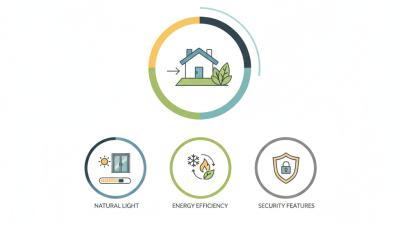
Define “Best” with 10 measurable metrics: thermal performance, air leakage, water tightness, wind resistance, acoustics, solar control, daylight, CE marking, ISO 9001, and environmental documentation.

The values shown are practical procurement screening benchmarks, not company results. Requirements vary by climate, building code, product type, and project specification. Always verify current test reports and certificates.

Shortlist 10 Suppliers by Export Reach, Capacity, Certifications, and Track Record

10 Best Doors and Windows Suppliers for Global Buyers?

A strong shortlist of ten suppliers should begin with export reach, not attractive product photos. Review shipment records, destination markets, distributor references, and production capacity. The World Bank’s Logistics Performance Index 2023 compares 139 economies, offering useful context for delivery reliability and customs performance. However, national rankings cannot replace supplier-level evidence.

Capacity needs practical proof. Request monthly output, standard lead times, mold availability, and recent project volumes. Check whether the factory can produce aluminum, uPVC, timber, or mixed systems consistently. The ISO Survey 2022 reported more than 1.2 million ISO 9001 certificates worldwide. Certification helps, but it does not guarantee accurate dimensions or careful packing. Ask for audit reports, test results, and photographs from loading bays. Small details matter.

Tips: Compare at least three recent export references. Confirm certifications with the issuing body. Study rejection rates and replacement policies. Use Trade Map data to compare a supplier’s target markets with real product flows. One weakness remains: public trade data may combine doors, windows, and related components. Buyers should therefore triangulate records, inspections, and customer feedback before ranking suppliers. A polished brochure is not enough.

Compare Products Using Uw ≤1.3 W/m²K, Class 4 Air Tightness, and RC2

When comparing the 10 best doors and windows suppliers for global buyers, start with measurable performance rather than showroom appearance. Require a tested Uw value of 1.3 W/m²K or lower for the complete window unit, not only the glass. This figure affects heat loss through the frame, glazing, and spacer. Ask for laboratory reports, test dates, and product configurations. A triple-glazed unit may achieve the target, but frame quality still matters.

Class 4 air tightness is another practical checkpoint. It indicates strong resistance to air leakage under standardized testing. In real projects, poor installation can reduce this advantage. Check sealing tapes, drainage details, corner joints, and installer training. RC2 security classification should also be verified through valid test documentation, not a sales claim. RC2 usually involves tested resistance against common hand tools. Confirm whether the complete door or window assembly achieved the rating.

Tips

Compare identical sizes and opening types. A small fixed window can perform better than a large tilt-and-turn unit. Request Uw, air tightness, water tightness, wind resistance, and RC2 results in one technical sheet. Check the declared test standard and local climate requirements. I have seen buyers focus on glass thickness and overlook installation gaps. That mistake is expensive. Ask for spare-part availability, replacement seals, delivery packaging, and warranty conditions. Some specifications remain unclear across markets, so record every assumption before signing.

Verify Rankings Through Samples, Factory Audits, Warranty Terms, and Landed Cost

10 Best Doors and Windows Suppliers for Global Buyers?

A credible supplier ranking needs more than polished catalogs and fast quotations. Request physical samples before comparing suppliers. Check frame joints, glass edges, drainage holes, hardware movement, and surface finish under daylight. Small flaws often appear only after handling. A polished catalog proves little.

Factory audits should verify production capacity, testing equipment, quality records, and worker safety practices. Ask whether the audited facility actually makes the quoted products. Review inspection points for glass thickness, profile dimensions, sealing, color consistency, and packaging strength. Photograph batch labels and carton protection. These details support a more reliable decision. Still, an audit is only a snapshot.

Warranty terms deserve careful reading. Confirm coverage periods, exclusions, replacement procedures, and responsibility for shipping damaged parts. A long warranty may have weak practical value if claims require unclear evidence. Request written answers, not verbal promises. Compare landed cost, including product price, tooling, packaging, freight, insurance, duties, local handling, and possible rework. The lowest quotation can become expensive after installation delays.

My own evaluation would not treat every score as exact. Supplier rankings can change with order size, destination, season, and customization. A small test order may reveal communication gaps that documents miss. Track response time, sample accuracy, packing condition, and corrective action. Leave room for doubt. Reliable sourcing is measured through repeated evidence, not one impressive factory visit.

10 Best Doors and Windows Suppliers for Global Buyers?

Verify Rankings Through Samples, Factory Audits, Warranty Terms, and Landed Cost

Benchmark basis: standardized thermally broken aluminum window and insulated exterior door package, 1,000 m² equivalent order, ocean freight to a major international port, excluding destination taxes, installation, and project-specific engineering.
Rank Supplier ID Primary Export Region Core Product Scope Factory Audit
Score / 100
Sample Lead Time Production Lead Time Warranty Terms Documented Standards Thermal U-Value Air / Water Performance Indicative MOQ Estimated Landed Cost Verification Priority
1 Supplier A East Asia Thermally broken aluminum windows, sliding doors, hinged doors 94Strong process control 10–14 days 35–45 days 10 years frame and hardware;
5 years insulated glass seal
ISO 9001;
EN 14351-1 test documentation;
CE technical file available
1.4–1.8 W/m²K Air: Class 4
Water: 600 Pa
Wind: Class C4
50–100 units US$285–340/m² Approve after physical audit
2 Supplier B Southern Europe Aluminum and uPVC windows, lift-and-slide systems, entrance doors 92Mature export systems 12–18 days 40–55 days 10 years profiles;
5 years hardware and glass components
ISO 9001;
EN 14351-1;
CE marking support;
air, water and wind reports
1.3–1.7 W/m²K Air: Class 4
Water: 750 Pa
Wind: Class C4
30–80 units US$330–395/m² Strong compliance candidate
3 Supplier C East Asia Commercial curtain wall, aluminum windows and insulated doors 91Good commercial capacity 14–20 days 45–60 days 8 years frames;
5 years hardware;
3 years surface finish in standard environments
ISO 9001;
ISO 14001;
EN and ASTM test options;
project engineering support
1.5–2.0 W/m²K Air: Class 4
Water: 600 Pa
Wind: Class C3–C4
100–200 units US$265–325/m² Audit glazing and coating lines
4 Supplier D Central Europe High-performance aluminum windows, patio doors and fire-rated doors 90High technical capability 15–21 days 45–65 days 10 years frames;
5 years hardware;
product-specific fire-rating warranty
ISO 9001;
EN 14351-1;
EN 16034 where applicable;
CE documentation
1.1–1.6 W/m²K Air: Class 4
Water: 750 Pa
Wind: Class C5
20–60 units US$390–480/m² Best for performance-led projects
5 Supplier E South Asia Aluminum windows, residential doors and custom architectural systems 87Competitive customization 12–18 days 40–55 days 7 years frames;
3 years hardware and glass seal
ISO 9001;
ASTM E283/E331 reports available;
project-specific testing
1.8–2.3 W/m²K Air: Class 3–4
Water: 450–600 Pa
Wind: Class C3
50–150 units US$245–305/m² Confirm batch consistency
6 Supplier F North Africa Aluminum doors, windows, shutters and façade openings 85Useful regional logistics 14–21 days 45–60 days 7 years profiles;
5 years hardware;
finish warranty varies by exposure
ISO 9001;
EN 14351-1 documentation;
coating certificates on request
1.7–2.2 W/m²K Air: Class 3–4
Water: 450 Pa
Wind: Class C3
40–100 units US$275–345/m² Check coating and salt-spray records
7 Supplier G Eastern Europe uPVC windows, aluminum doors and residential replacement units 84Flexible residential range 10–16 days 35–50 days 5 years complete product;
10 years insulated glass against seal failure
ISO 9001;
EN 14351-1;
CE documentation for applicable products
1.2–1.8 W/m²K Air: Class 4
Water: 600 Pa
Wind: Class C3–C4
25–75 units US$315–385/m² Verify hardware source and spare parts
8 Supplier H Latin America Aluminum windows, balcony doors and hurricane-resistant options 82Regional code experience 14–22 days 45–70 days 5 years frames;
2 years hardware;
special systems subject to test report
ISO 9001;
ASTM test capability;
local building-code documentation
1.8–2.5 W/m²K Air: Class 3
Water: 450–600 Pa
Wind: project-specific
50–120 units US$350–430/m² Require project-specific structural tests
9 Supplier I Middle East Aluminum curtain wall, windows and thermally improved entrance doors 80Strong hot-climate suitability 16–24 days 50–75 days 5 years frames and finish;
3 years hardware;
glass warranty separately stated
ISO 9001;
ASTM E283/E331;
project-based thermal and structural reports
1.7–2.4 W/m²K Air: Class 3–4
Water: 450 Pa
Wind: Class C3
80–200 units US$305–375/m² Inspect thermal-break assembly
10 Supplier J Southeast Asia Aluminum sliding doors, windows and lightweight commercial systems 78Cost-focused offering 12–20 days 40–60 days 5 years frames;
2 years hardware and accessories;
glass seal terms vary
ISO 9001;
selected EN or ASTM test reports;
factory inspection recommended
1.9–2.6 W/m²K Air: Class 3
Water: 300–450 Pa
Wind: Class C2–C3
100–250 units US$230–295/m² Use third-party pre-shipment inspection
Buyer verification checklist: approve the ranking only after matching the approved sample with mass production, checking raw-material and hardware traceability, completing an independent factory audit, confirming warranty exclusions and claim procedures, and recalculating landed cost with freight, insurance, duties, port charges, currency movements and local compliance costs.

Ontario launching new 12-year rebate program