How to Choose Between Double Hung and Single Hung Windows?
Choosing between double hung and single hung windows can affect more than a home’s appearance. Both styles use vertically sliding sashes, but their operation differs: a single hung window usually has one movable sash, while both sashes move on a double hung model. That difference can change how you ventilate a room, clean the glass, and manage everyday use. Small details matter.
Consider the room, too. Opening both sashes on a double hung window may allow air to enter and exit through different parts of the opening, depending on the layout and conditions. A single hung window may suit a space where straightforward operation and a lower purchase price are priorities. But prices vary by size, materials, glazing, and installation. Do not assume the window style alone determines cost or energy performance.
Cleaning access is another practical point. Some double hung models tilt inward, but features vary, so check the specific product rather than relying on the label. Think about who will operate the window, how often it will be opened, and whether furniture blocks access. Measure carefully, and compare warranties, hardware, and installation details. No option wins every room. A double hung window may offer useful flexibility; a single hung one may meet your needs with fewer moving parts. The trade-off is real, and your best choice depends on the home, budget, and daily habits—not on a simple rule.
Understanding the Design of Double-Hung and Single-Hung Windows
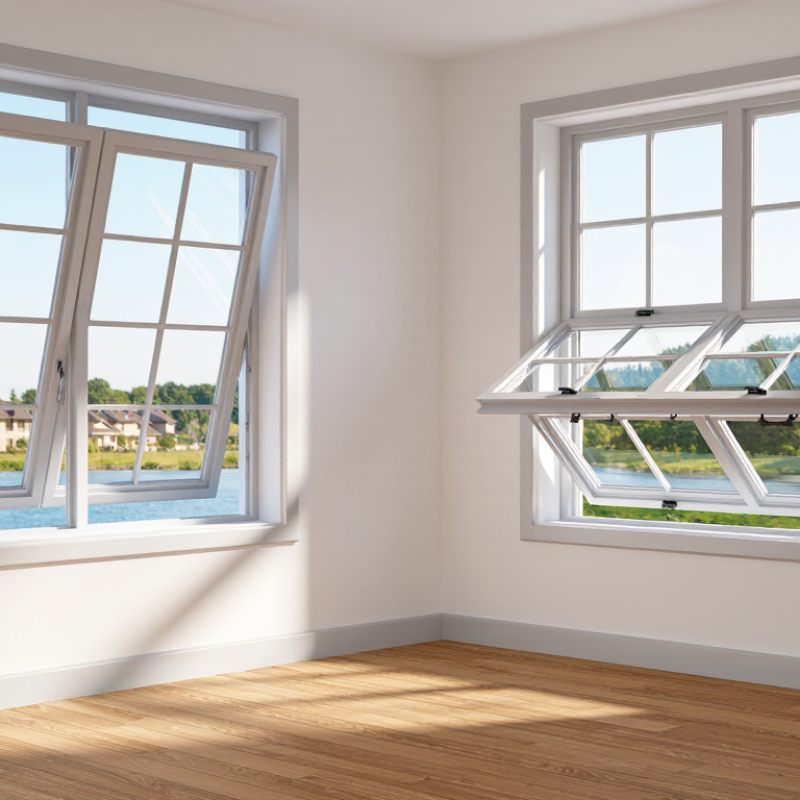
Both window types have a frame and two vertically arranged sashes. In a double-hung window, both the upper and lower sash move, usually sliding past each other. Many models also let the sashes tilt inward for cleaning, but the exact mechanism varies. This design offers two opening points. Warm air may escape through the upper opening as cooler air enters below, though room layout and weather affect the result. A small detail, but useful.
A single-hung window looks similar, yet only its lower sash moves; the upper sash remains fixed. Fewer moving parts may mean a simpler mechanism, but sash count alone does not determine durability or energy performance. Check the weatherstripping, locks, frame, and installation quality. Picture a counter directly beneath the window: reaching a movable upper sash for cleaning may be awkward, while a tilt-in design could help. It is easy to overlook that difference. Before choosing, operate the actual window if possible; drawings can make distinct mechanisms look nearly identical.
Comparing How Each Window Type Opens and Ventilates
A single hung window opens from the bottom: its lower sash slides upward while the upper sash stays fixed. That gives you one clear path for fresh air. In a small bedroom, you can raise the sash a few inches to let in a breeze without opening the entire window. The trade-off is simple. You cannot adjust the upper opening.
A double hung window lets both sashes move, so you can open the top, the bottom, or both. On a warm day, opening the lower sash can bring in cooler air while the upper opening gives warmer air a way out. The effect depends on wind, room layout, and temperature; it is not guaranteed airflow. Still, being able to choose the opening can help when a breeze blows directly across the lower part of a room.
Think about how you actually ventilate. If you often crack a window while cooking or airing out a room, two movable sashes offer more control. If you mainly open windows briefly, one movable sash may be enough. Screens, nearby furniture, and the size of the opening also matter. A wider choice can be useful, but it may not feel worthwhile in every room. That is easy to overlook.
| How to Choose Between Double Hung and Single Hung Windows? - Comparing How Each Window Type Opens and Ventilates |
| Comparison |
Double-Hung Windows |
Single-Hung Windows |
| How the sashes open |
Both the upper and lower sashes can move vertically. Either sash can typically be opened independently. |
The lower sash moves vertically; the upper sash is typically fixed in place. |
| Ventilation options |
Air can enter or leave through either opening. Opening both sashes can create lower and upper openings, which may support airflow through the room when outdoor conditions allow. |
Ventilation comes through the opening created by raising the lower sash. There is no upper-sash opening in the typical design. |
| Adjusting airflow |
The size and position of two openings can be adjusted by moving either sash, offering more flexibility in how the window is ventilated. |
Airflow is adjusted by raising or lowering the operable lower sash. |
| Cleaning from indoors |
Some models have tilt-in sashes that make exterior glass easier to reach from inside. Tilt-in operation is not included on every model. |
Some models have a tilt-in lower sash for cleaning. The fixed upper sash may be harder to reach from indoors. |
| Moving parts |
Both sashes operate, so the window typically has more moving and balance components than a comparable single-hung design. |
Only the lower sash operates in the typical design, so there are fewer operable sash components. |
| Common practical consideration |
Useful when access to two separate sash openings or greater control over ventilation is a priority. |
Can be a straightforward option when a single operable opening meets ventilation needs. |
| What to check before buying |
Confirm which sashes operate, whether they tilt in, the screen arrangement, and the manufacturer’s published energy-performance ratings. |
Confirm the lower sash’s operation and cleaning features, the screen arrangement, and the manufacturer’s published energy-performance ratings. |
| Window features vary by model. Actual ventilation depends on the opening size, room layout, wind, and temperature; compare the specifications of the exact products being considered. |
Assessing Cleaning, Maintenance, and Everyday Use
Double-hung and single-hung windows differ most during cleaning and daily use. With a double-hung window, both sashes usually move, and many models tilt inward. That makes it easier to clean both sides from inside, especially on an upper floor. A single-hung window typically has a fixed upper sash, so cleaning its exterior may require safe outdoor access. Check the window’s instructions before tilting or removing any sash; designs vary.
More moving parts can mean more tracks and balances to keep clear and in working order. Wipe dust from tracks, check that locks engage, and look for worn weatherstripping during routine cleaning. Neither style is maintenance-free. A sticky sash might need cleaning, but forcing it can cause damage. In everyday use, double-hung windows let you adjust airflow from the top, bottom, or both. Single-hung models offer simpler operation, though ventilation choices are more limited. Sometimes convenience matters more than flexibility.
Tips: Open and close each window gently before buying, if possible. Notice whether the sash feels heavy or catches. For a tall room, consider how you will clean the outside safely; a tilt feature may help, but it is not a substitute for careful handling. One small oversight: screens and window treatments can affect access, too.
Evaluating Costs, Energy Efficiency, and Installation Needs
How to Choose Between Double Hung and Single Hung Windows?
Cost and energy performance depend more on the window specification than the number of moving sashes. Single-hung units usually cost less because only the lower sash opens. Double-hung units let both sashes move, which can make cleaning easier, especially on upper floors. That convenience has a price. Compare quotes for the same frame material, glass package, size, and installation work; otherwise, the price difference can be misleading.
For efficiency, check the National Fenestration Rating Council label, especially U-factor and solar heat gain coefficient. These ratings allow useful comparisons between models. The U.S. Department of Energy estimates that windows account for roughly 25–30% of residential heating and cooling energy use. ENERGY STAR reports potential annual savings of $101–$583 when replacing single-pane clear windows with certified models, depending on location. That figure is not a guaranteed saving, and it does not mean double-hung windows automatically outperform single-hung ones.
Installation can change the decision. A double-hung sash may help ventilate a room when airflow needs adjustment, but both styles still require a properly sized, sealed opening. Measure twice. Older frames may be out of square, and a small gap can undermine otherwise efficient glazing. Ask installers to inspect sill condition, flashing, and air leakage before quoting; I would not choose by window price alone.
Matching the Window Type to Your Home and Priorities
A window should suit the way a room is used, not just its façade. In a narrow kitchen above a sink, a single-hung window keeps the upper sash fixed and opens from the bottom. It can be a practical choice where ventilation needs are modest. Double-hung windows let both sashes move, so warm air can escape through the top while cooler air enters below. That airflow can be useful on a mild evening. In an upstairs room, tilt-in sashes may also make cleaning easier. Still, extra movement is not always worth paying for; a rarely opened guest-room window may not need it.
Energy performance depends more on the whole window assembly than on its hung style. ENERGY STAR estimates that replacing single-pane windows with certified products can cut household energy bills by 7–15 percent, though results vary with climate, home design, and installation. Compare National Fenestration Rating Council labels for U-factor and solar heat gain coefficient, rather than assuming either style is automatically more efficient. A tight fit matters, too. Even a well-rated window can disappoint if air leaks around its frame.
Tip: Before ordering, note which sash you actually open, where furniture sits, and whether you can reach the exterior glass safely. If ventilation is your priority, confirm that the opening area meets your needs; a double-hung sash does not always open fully. Measure twice. A small detail, easily missed.