What Are the Top Quality Windows for 2026?

Choosing quality windows for 2026 takes more than comparing frame materials or attractive showroom displays. A window must suit the home, local weather, and installation conditions. Look closely at energy ratings, glass options, air leakage, warranty terms, and the installer’s experience. A sleek frame can still disappoint if cold air slips around its edges.

Building scientist Dr. John Straube’s work emphasizes an important principle: window performance depends on the whole building enclosure, not the glass alone. That is a useful lens for comparing today’s leading options. A durable frame, well-sealed joints, and correctly selected glazing should work together. Details matter. On a rainy morning, poor sealing may show up as a draft, condensation, or water near the sill. No single model suits every home, though, and product labels can be confusing. That deserves a closer look.

This guide explores what makes quality windows stand out in 2026, from materials and performance ratings to installation and long-term value. It also considers where premium features may not justify their added cost. The best choice is not always the most expensive. It is the one that fits your climate, budget, and home—and performs as promised after the showroom visit.
What Are the Top Quality Windows for 2026?

What Defines a High-Quality Window in 2026?

What defines a high-quality window in 2026 is measured performance, not attractive marketing. A reliable window should limit heat transfer, resist air leakage, and manage sunlight effectively. Look for independently verified U-factor, solar heat gain, visible transmittance, and air-leakage ratings. Lower U-factor usually means better insulation. However, the best value depends on your climate and room orientation.

Frame quality matters just as much as the glass. Fiberglass, well-designed vinyl, and thermally improved metal frames can perform differently in extreme weather. Check corner welds, drainage paths, locking points, and gasket flexibility. A tight seal should feel firm, not brittle. During installation, uneven shims or expanding foam gaps can weaken an excellent product. This detail is easy to miss.

I would also examine the warranty, service terms, and published test reports. Honest documentation should explain testing conditions clearly. Be cautious when performance claims lack numbers. More glass is not always better. Large windows may increase daylight while raising cooling loads. My own assessment would still include noise, cleaning access, condensation risk, and the installer’s experience. A technically strong window can fail in practice when the opening is measured poorly. That possibility deserves attention.

What Are the Top Quality Windows for 2026?

A useful quality measure is the NFRC-rated U-factor: lower values indicate less heat transfer. These are the ENERGY STAR Version 7.0 maximum U-factor limits for certified residential windows by U.S. climate zone.

Lower U-factor limits indicate stricter insulation requirements. The best choice depends on your climate; also compare NFRC ratings for solar heat gain, air leakage, and visible transmittance. ENERGY STAR window criteria

Which Window Materials Offer the Best Performance?

For 2026, window quality depends less on appearance than on measured performance. The frame material affects strength, thermal movement, maintenance, and expected service life. Glazing still matters. A well-built frame with low-emissivity double glazing can outperform an expensive frame with poor glass. Look for a low U-factor, suitable solar heat gain coefficient, and tested air leakage. These figures should match your climate and room orientation.

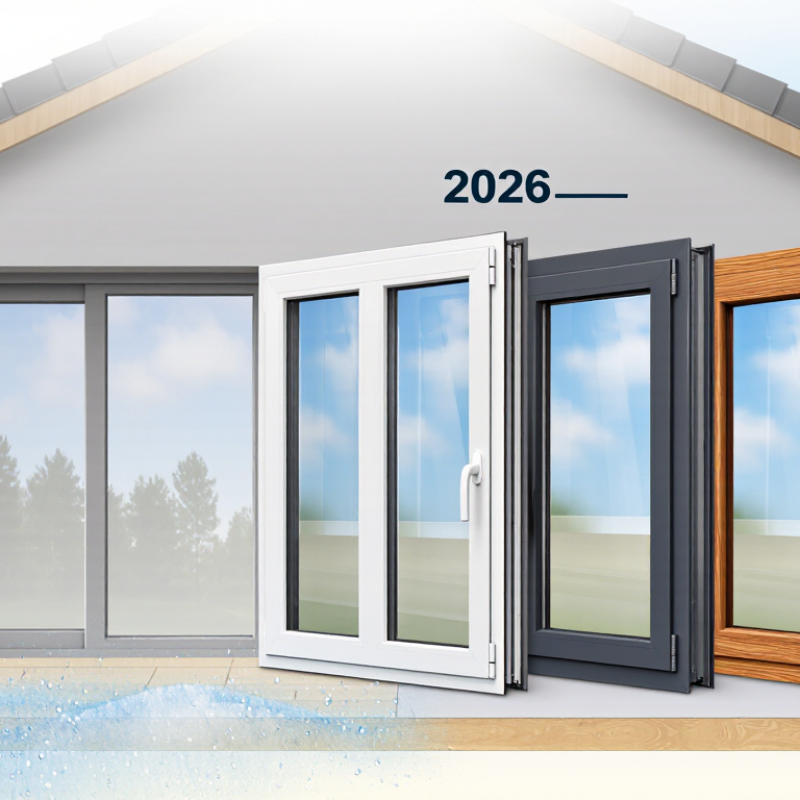
Vinyl or uPVC frames offer strong insulation and modest maintenance, especially in ordinary residential climates. However, dark finishes can absorb heat, and lower-grade profiles may warp near intense sunlight. Fiberglass handles temperature changes well and supports narrow sightlines. It often costs more, but its dimensional stability can reduce long-term adjustment problems. Wood provides excellent insulation and a warm interior surface. It needs disciplined painting, sealing, and regular inspection, particularly at wet sills.

Aluminum is strong, slim, and useful for large openings. Without a reliable thermal break, it can transfer heat and encourage interior condensation. Composite frames can balance stiffness and insulation, yet performance varies by core and manufacturing quality. During site inspections, I pay close attention to corner joints, drainage paths, and the installation gap. A superior window can perform poorly when shims are uneven or perimeter foam is missing. No material wins everywhere. I have seen impressive specifications deliver disappointing comfort. Independent test reports deserve more trust than polished sales language. Ask for installation details, warranty limits, and maintenance requirements before choosing.

How Energy Efficiency Shapes Window Quality

What Are the Top Quality Windows for 2026?

How Energy Efficiency Shapes Window Quality

In 2026, quality windows should do more than look clean and operate smoothly. They should control heat, sunlight, air, and indoor comfort. The U.S. Department of Energy reports that windows can cause 25% to 30% of residential heating and cooling energy use. That figure makes energy performance a practical quality test, not a decorative feature.

Look for a low U-factor in cold climates, because it limits heat loss through the glass. In warmer regions, a lower solar heat gain coefficient can reduce unwanted afternoon heat. The National Fenestration Rating Council explains that these ratings allow fair comparisons between window products. Visible transmittance also matters. A bright room may reduce daytime lighting demand, but excessive glass can create glare and hot spots.

Small details matter.

During a home inspection, a poorly sealed frame can undermine excellent glass. A narrow gap beneath the sash may produce a cold draft near the floor. The DOE also identifies air leakage as an important comfort and efficiency concern. ENERGY STAR guidance states that replacing clear, single-pane windows with certified efficient units can reduce household energy bills by about 12% on average. Results vary by climate, installation, and building condition.

I would not call any window perfect. Ratings describe laboratory performance, while real homes contain uneven walls, aging seals, and imperfect installation. A high-quality choice therefore combines verified ratings, suitable climate design, durable hardware, and careful fitting.

What Features Improve Window Security, Comfort, and Durability?

What Are the Top Quality Windows for 2026?

Top-quality windows in 2026 should protect occupants, reduce drafts, and withstand years of weather. The U.S. Department of Energy estimates that windows can account for about 25% of residential heating and cooling energy use. Low U-factor glass reduces heat loss, while an appropriate solar heat gain coefficient limits summer overheating. Warm-edge spacers and insulated frames also reduce condensation along the indoor glass edge. Small details matter.

Security depends on the complete assembly, not the lock alone. Laminated glass can remain partly bonded after impact, making forced entry more difficult. Multi-point hardware, reinforced keepers, and secure installation improve resistance further. ASTM forced-entry testing offers useful evidence, while the FGIA/NAFS standard evaluates air leakage, water penetration, and structural performance. Buyers should request test ratings, not vague claims. A strong window can still fail when installers leave gaps around the frame.

Comfort also depends on verified labels. NFRC ratings help compare U-factor, solar heat gain, visible transmittance, and condensation resistance under consistent methods. Energy Star guidance supports choosing products suited to local climate conditions, rather than selecting the lowest U-factor everywhere. That choice is easy to get wrong. Coastal homes need corrosion-resistant hardware, while cold regions need excellent edge insulation and careful flashing. No window is perfect. Long-term durability comes from tested materials, drainage paths, UV-resistant seals, and documented installation instructions. A realistic specification leaves room for maintenance, because even excellent components age.

What Are the Top Quality Windows for 2026? - What Features Improve Window Security, Comfort, and Durability?

A practical, brand-neutral guide to comparing window features. The best choice depends on local climate, building codes, exposure, and installation quality.

Feature What to Look For Security Benefit Comfort and Energy Benefit Durability and Practical Checks
Insulating glazing Double- or triple-pane glass with sealed insulating spaces; low-emissivity (low-E) coatings and gas fill may be available. Glazing alone is not a substitute for secure locks, sound frames, and correct installation. Can reduce heat transfer. Compare the National Fenestration Rating Council (NFRC) U-factor; a lower value indicates better insulation. Choose a solar heat gain coefficient (SHGC) suited to the climate and window orientation. Check the warranty and service provisions for insulated-glass seal failure, which can cause visible condensation between panes.
Laminated glass Glass panes bonded with a tough interlayer; confirm the glazing specification for the intended application. If broken, the interlayer helps hold glass fragments together and can make entry more difficult. It is not burglar-proof. Depending on the glass makeup, it may also help reduce outside noise and limit some ultraviolet transmission. Use where appropriate for local safety requirements, impact exposure, or security needs; the complete window assembly still matters.
Tempered safety glass Safety glazing in locations where building codes require it, such as certain doors or areas near walking surfaces. Designed to break into smaller particles than ordinary annealed glass, reducing the risk of severe lacerations; it is not designed as a forced-entry barrier. Provides no automatic improvement in insulation; thermal performance depends on the full glazing package. Verify code requirements for each location. Tempered glass generally cannot be cut or drilled after it has been heat-treated.
Locks and operating hardware Positive-locking hardware that engages securely, with hardware suited to the window style. Casement units may use multipoint locking systems. A secure lock helps resist opening from outside when the window is closed and correctly maintained. Properly closing and locking the sash helps maintain contact with weather seals. Check that locks engage smoothly and that replacement parts are available. Hardware strength cannot compensate for a weak frame or poor anchoring.
Frame material and construction Compare vinyl, fiberglass, wood, and aluminum by structural design, thermal performance, exposure, and maintenance needs. Frame strength, sash construction, fastening, and installation all contribute to resistance against forced movement. Materials and internal construction affect heat transfer; thermally improved frames can help limit heat loss and condensation. Vinyl generally needs little painting; wood needs protection from moisture; aluminum can be durable but may conduct heat unless thermally improved; fiberglass is dimensionally stable and typically needs little maintenance.
Weather seals and drainage Continuous, replaceable weatherstripping, well-designed sill drainage, and clear drainage paths. Good fit can reduce gaps that might be exploited, but weather seals are not a security lock. Helps limit drafts and water entry when the sash is closed and properly adjusted. Inspect seals and drainage openings periodically; keep weep holes clear and replace damaged weatherstripping as needed.
Tested performance ratings Review an NFRC label for energy ratings and product documentation for tested air, water, and structural performance. Structural performance ratings can help assess suitability for local wind conditions, but are not a standalone security rating. Air leakage information, where provided, helps compare resistance to unwanted air movement. Lower air leakage is generally preferable when ratings use the same test method. Compare products using the same standards and rating units; required performance varies with climate, building design, and local code.
Professional installation Correct sizing, secure anchoring, properly flashed openings, and sealed joints installed according to the manufacturer’s instructions. Anchoring the frame to the structure is essential; a strong window installed poorly may still be vulnerable. Careful air sealing and flashing help prevent drafts, water intrusion, and moisture-related comfort problems. Ask for written installation details, warranty coverage, and confirmation that the work meets local building-code requirements.

Comparison note: No single window feature guarantees security, comfort, or long service life. Ratings and performance vary by model and configuration; confirm the actual product documentation and local code requirements before purchase.

How to Choose the Right Quality Windows for Your Home

Choosing quality windows starts with your home, not a showroom display. A bright south-facing room may need low-solar-gain glass, while a shaded bedroom may benefit from stronger heat retention. Check the window’s U-factor, solar heat gain coefficient, air leakage rating, and visible light transmission. Lower U-factors usually improve insulation. However, the best balance depends on your climate and room orientation.

Frame material matters too. Well-built vinyl, wood, fiberglass, and composite frames can perform reliably when properly designed and installed. Look for tight corner joints, smooth hardware, durable weather seals, and drainage paths. Ask for written performance data, warranty conditions, and installation details. A quality window can still fail when the opening is measured poorly or flashing is incomplete.

I once focused too heavily on glass ratings and overlooked installation depth. That mistake created drafts near the sill. It changed how I assess windows now. Measure each opening separately, especially in older homes. Hold a sample near the wall and inspect its color, sightline, and locking action. Listen for traffic noise with the window closed. Ask whether replacement work will disturb interior trim or exterior siding. Do not trust vague claims such as “energy efficient.” Request test results and confirm who handles future service. Perfect choices are rare. A practical fit often matters more.

Ontario launching new 12-year rebate program