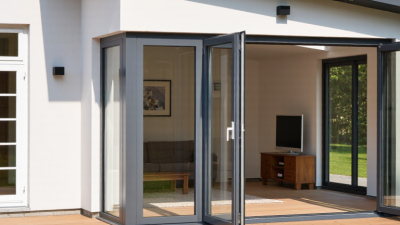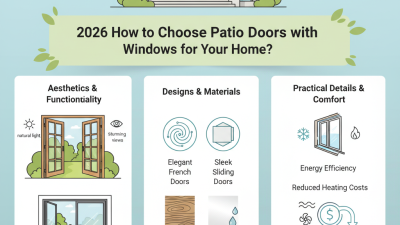
China Top 10 Patio Doors With Windows Manufacturers?

China’s patio doors with windows sector is expanding alongside demand for brighter rooms, wider views, and better indoor comfort. However, appearance alone cannot identify a dependable manufacturer. Frame strength, glass performance, drainage design, hardware quality, and after-sales support matter just as much.

The U.S. Department of Energy reports that windows can account for 25% to 30% of residential heating and cooling energy use. This finding gives patio doors with windows a practical importance beyond decoration. Low-emissivity glass, insulated frames, warm-edge spacers, and reliable weather seals can reduce unwanted heat transfer. Energy Star also recommends selecting products suited to the local climate rather than relying only on appearance.

Market research from Grand View Research and Fortune Business Insights indicates continued growth in energy-efficient doors and fenestration products. Yet market estimates differ by definition. Some reports include entrance doors, while others separate sliding systems and folding designs. That limitation deserves attention.

Building-science expert Joe Lstiburek is widely associated with the concise principle, “A building is a system.” His statement applies directly here. A beautiful sliding door can still perform poorly if installation, flashing, or wall drainage is ignored.

This guide examines China’s top 10 patio doors with windows manufacturers through a practical lens. It considers product engineering, factory capability, certifications, customization, export experience, and communication reliability. The ranking is not absolute. Supplier suitability depends on project location, climate, budget, and technical requirements. Some companies may look impressive online but provide limited installation guidance. That is where careful verification becomes essential.
China Top 10 Patio Doors With Windows Manufacturers?

China’s Top 10 Patio Door Manufacturers: Scope, Definitions, and Market Criteria

China’s Top 10 Patio Door Manufacturers: Scope, Definitions, and Market Criteria

This guide examines Chinese manufacturers of patio doors with integrated or compatible glass panels. The scope includes sliding, folding, hinged, and lift-and-slide systems for homes, apartments, hotels, and light commercial spaces. It excludes glass-only suppliers, hardware traders, and companies without verifiable manufacturing capacity. A manufacturer should show production facilities, technical documentation, quality controls, and export experience. Factory visits, sample inspections, and specification reviews provide stronger evidence than polished websites alone.

Market selection considers thermal performance, air and water resistance, structural strength, glass options, customization, lead times, and after-sales support. Materials matter. Aluminum profiles, thermal breaks, seals, rollers, and locking systems affect daily performance. Certifications can support credibility, but they should match the destination market and product type. Price is included, but it is not the main measure of value. A low quotation may hide thinner profiles, weaker hardware, or limited testing. One limitation remains: public factory data is often incomplete, so rankings require careful verification and periodic revision.

Tips: Request full section drawings and tested performance reports. Ask for installation guidance, warranty terms, replacement-part availability, and recent project references. Compare identical specifications before comparing prices. Check how the door moves after repeated opening, especially when the panel is large. Small details matter. A factory may be capable, yet communication delays can still affect delivery and installation. Document every technical change, because informal promises are easy to misunderstand.

How U-Value, SHGC, and Air Leakage Ratings Define Patio Door Performance

A credible China top-10 patio door comparison should examine tested performance, not appearance or production scale. U-value, SHGC, and air leakage reveal how a door behaves in real homes.

U-value measures heat transfer through the frame and glass. Lower values usually indicate better insulation. A well-insulated door feels less cold beside the handle during winter. However, a low U-value does not guarantee comfort. Frame design, spacer quality, installation, and glass-edge sealing also matter. Condensation may still appear in humid rooms.

SHGC shows how much solar heat enters through the glazing. Higher SHGC can help warm a sun-facing room during cold seasons. Lower SHGC may reduce overheating in hot climates. Orientation changes the result. A south-facing opening needs different planning from a shaded courtyard door.

Air leakage measures unwanted airflow through gaps. Lower leakage rates generally improve comfort and energy control. Windy coastal sites expose weak seals quickly. Ask manufacturers for independently verified test results and clearly stated units. Testing standards must match across suppliers. Otherwise, comparisons become misleading.

I have seen attractive doors perform poorly after rushed installation. That detail is easy to ignore. Published ratings offer useful evidence, but they are not the whole installation story. Look for durable weatherstripping, reinforced corners, and precise adjustment guidance. Even experts should question unusually impressive numbers without supporting documentation.

How U-Value, SHGC, and Air Leakage Define Patio Door Performance

The chart compares representative residential patio-door performance levels by glazing configuration. U-factor measures heat transfer, SHGC measures the fraction of solar heat admitted, and air leakage measures infiltration in cfm/ft² at 1.57 psf. Lower U-factor and air-leakage values generally indicate better insulation and tighter construction, while the preferred SHGC depends on climate, orientation, and heating or cooling priorities.

Values are representative industry benchmark ranges based on common residential fenestration configurations, not manufacturer or brand ratings. Actual whole-door ratings should be verified through NFRC-certified product data.

China’s Top 10 Manufacturers Ranked by Materials, Certifications, and Capacity

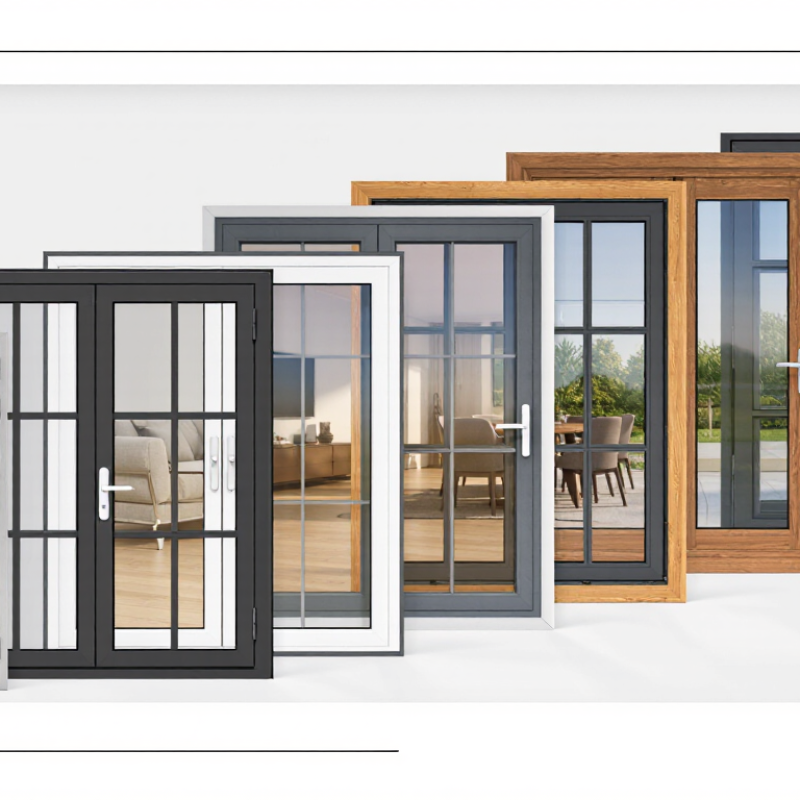
China’s top 10 patio-door manufacturers should be ranked by evidence, not advertising claims. Thermally broken aluminum leads for strength and slim frames. uPVC offers strong insulation at a lower cost. Wood-aluminum systems provide warmth, but require careful moisture control. Each manufacturer should show glass specifications, spacer details, coating thickness, and hardware load ratings.

Certifications deserve equal attention. ISO 9001 indicates controlled production, but it does not prove product performance. Strong candidates provide verified air, water, wind, and thermal test reports. Export-oriented factories may also hold CE, NFRC-related, or regional compliance documentation. Buyers should check issuing laboratories and report dates. Documents can be genuine yet outdated. That detail is often missed.

Production capacity separates capable suppliers from attractive workshops. A serious manufacturer may operate automated cutting, welding, powder coating, and insulating-glass lines. Useful evidence includes annual output, quality inspection records, container loading photos, and realistic lead times. A factory claiming millions of units should explain how it manages custom sizes and replacement parts. My ranking would favor transparent mid-sized producers over the largest plants when communication is weak. Capacity looks impressive. Service still decides the project. On-site experience also shows that small errors, such as uneven drainage slots or poor corner sealing, can cause expensive complaints. No ranking is permanent; materials, audits, and factory conditions should be reviewed before every purchase.

Comparing Door Systems Through GB/T 7106, GB/T 8484, and NFRC Metrics

China’s top 10 patio door manufacturers should be compared through verified performance, not appearance alone. GB/T 7106 evaluates air permeability, watertightness, and resistance to wind pressure. These tests reveal how a sliding door behaves during storms, pressure changes, and daily operation.

GB/T 8484 focuses on thermal insulation. Its results help assess heat transfer through frames, glazing, and edge spacers. NFRC metrics add a useful international reference, including U-factor, solar heat gain coefficient, visible transmittance, and air leakage. However, these systems are not identical. A direct score comparison can mislead. Look for complete test reports, specimen sizes, glass configurations, and accredited laboratory details. Factory claims need evidence.

Tips: Request test data for the exact door system, not a similar model. Check whether the report covers the selected frame, glass, hardware, and seals. Examine drainage paths and corner joints physically.

A door may achieve strong laboratory results but perform poorly after careless installation. I have also found that lower U-factor is not always ideal in every climate, because excessive solar gain can increase cooling demand. Ask manufacturers to explain the design trade-off in plain language. Their answer often shows more expertise than a polished catalog.

How Glass Options, Hardware, Warranty Terms, and Export Data Affect Selection

China Top 10 Patio Doors With Windows Manufacturers?

Selecting Chinese patio-door manufacturers requires more than comparing catalog photos. Glass performance should come first. The U.S. Department of Energy reports that windows can cause significant residential heating and cooling losses. Low-emissivity glass, warm-edge spacers, and argon filling can reduce heat transfer. Ask for NFRC-style U-factor and Solar Heat Gain Coefficient values. Do not accept “energy-saving glass” as a complete specification. Tempered or laminated glass also improves safety, especially beside busy terraces. Testing matters more than attractive samples.

Hardware reveals manufacturing discipline. Check stainless-steel rollers, multipoint locks, drainage paths, and salt-spray test records. AAMA/WDMA/CSA 101/I.S.2/A440 standards provide useful performance benchmarks for air, water, and structural testing. Warranty terms deserve equal attention. Request separate coverage for frames, insulated-glass units, finishes, rollers, and seals. Clarify who pays freight and replacement labor. A long warranty may still be weak if exclusions are broad. I have seen buyers overlook this detail. That mistake becomes expensive.

Tips: Compare three factories using the same door size and glass build-up. Ask for recent test reports, factory inspection evidence, and installation guidelines. Use UN Comtrade export data carefully. HS codes separate plastic, aluminum, and steel products, so rankings can change with classification. Export value alone cannot prove quality. Review shipment consistency, destination markets, and complaint handling. Keep one sample installed outdoors for several weeks before placing a large order. Real exposure often reveals drainage or hardware problems that brochures hide.

Ontario launching new 12-year rebate program