Best Patio Doors and Windows Manufacturers in China
Choosing among the best patio doors and windows manufacturers in China takes more than comparing catalog photos. A wide sliding door may look elegant, yet its value depends on frame strength, glass specification, drainage, and hardware quality. Small details matter. This guide introduces manufacturers and explains practical points buyers can check before requesting quotations or samples.
The right supplier depends on the project. A coastal home may need corrosion-resistant fittings, while a cold-climate renovation may prioritize thermal performance and airtight seals. Ask for clear product specifications, test reports, applicable certifications, warranty terms, and examples of completed projects. Confirm that reported performance matches the exact product configuration, including glazing and frame type. A factory visit or independent inspection can also help assess production consistency, packaging, and quality-control procedures.
No single company is best for every buyer. Even a polished catalog can leave important questions unanswered, and that is worth remembering. Communication, lead times, customization limits, and after-sales support can matter as much as the quoted price. This overview offers a starting point for comparing patio doors and windows manufacturers in China with a more informed eye. Verify claims directly, especially when specifications affect safety, comfort, or long-term maintenance. A careful comparison takes time. Still, it can help buyers identify suppliers whose products and service are better suited to their project, budget, and delivery requirements.
Structure of China’s Patio Door and Window Manufacturing Industry
China’s patio door and window industry is built around a layered supply chain. Upstream suppliers provide aluminum profiles, glass, hardware, seals, and surface finishes. Fabricators cut and assemble these parts into sliding, folding, or hinged systems. Some factories handle most processes in-house; others rely on specialist partners. That difference can affect lead times and quality control.
Manufacturing is concentrated in several regional industrial clusters, where material suppliers and component workshops operate close to assembly plants. This proximity can make custom sizing easier. A factory may adjust frame depth, glass thickness, or handle placement for a project. Details matter. Buyers should ask how measurements are checked, how finished units are protected in transit, and what inspection records are available. A polished showroom sample alone tells only part of the story.
Many manufacturers serve domestic projects, overseas distributors, or both. Their capabilities vary: one may excel at large-volume standard sizes, while another may be better suited to small batches and unusual openings. Production capacity is not the same as dependable delivery. It is worth reviewing drawings, sample corners, hardware specifications, and packing methods before placing an order. The structure is efficient, though not always simple; component changes can ripple through a schedule, and that is easy to underestimate.
Criteria for Assessing Manufacturer Quality and Capability
Best Patio Doors and Windows Manufacturers in China
Assessing manufacturer quality takes more than comparing product photos or quoted prices. Request clear specifications for frame materials, glass construction, hardware, drainage, and finish durability. A capable manufacturer should explain how each option suits your climate, opening size, and expected use. Ask for test reports that identify the tested product configuration; a report for a different model may offer little reassurance. Details matter.
Review production capability through documented quality checks, sample consistency, and communication during technical discussions. Ask how measurements are confirmed, how defects are recorded, and what inspection steps happen before shipment. If possible, inspect a sample for smooth operation, even gaps, secure seals, and clean corner joints. A polished sample is useful, but it cannot prove every production unit will match. No checklist catches everything.
Tips: Compare the same specifications across quotes. Ask for recent project references and clarify lead times, packaging, and after-sales support in writing. Notice whether answers are specific or vague. A slower response is not automatically a warning, but unclear answers deserve follow-up. Reflect on your own priorities, too: the lowest price may not fit a coastal site or frequent-use doorway.
Notable Patio Door and Window Manufacturers in China
Notable patio door and window manufacturers in China serve projects ranging from compact city apartments to coastal villas. Many produce sliding, folding, and hinged systems in aluminum, uPVC, or timber. Their capabilities vary, so buyers should compare more than catalogue photos. Ask about frame depth, glass options, drainage design, and hardware. Small details matter.
A useful factory review includes sample corners, production records, and quality checks for dimensions and surface finish. Request test information for air leakage, water resistance, and wind pressure, where relevant to the project. Check the details. Also confirm whether custom sizes affect lead times or require special tooling. Clear answers are a good sign, though polished presentations alone prove little.
Installation support deserves equal attention. A well-made door can still leak if the sill, flashing, or wall opening is poorly prepared. Ask how the manufacturer handles packing, delivery damage, replacement parts, and technical guidance for local installers. No supplier is perfect. Even experienced teams may have limits with unusual openings or tight schedules, so document assumptions before ordering. A site visit or independent inspection can reveal practical issues that brochures miss.
Product Categories, Materials, and Customization Options
Chinese manufacturers typically offer sliding, folding, and lift-and-slide patio doors, alongside casement, tilt-turn, and fixed windows. Sliding doors suit compact rooms because their panels do not swing inward. Folding systems open wider, but their tracks need careful cleaning. A small detail matters.
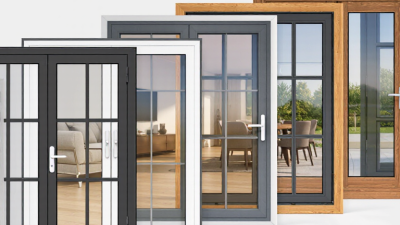
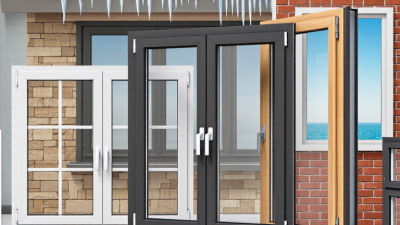
Common frame choices include aluminum, thermally broken aluminum, uPVC, and aluminum-clad wood. Aluminum supports slim sightlines and larger glass panels. Thermally broken frames add an insulating barrier between indoor and outdoor surfaces. Glass options include double glazing, laminated panes, and low-emissivity coatings, depending on climate, noise, and safety needs. Customization may cover opening dimensions, frame colors, grille patterns, handles, screens, and threshold height. Ask for drawings that show these details, not just a finish sample.
Before comparing quotations, confirm the wall opening, drainage direction, glass specification, and hardware type. Request relevant air, water, and structural test documentation for the proposed configuration; results can vary with size and installation. A wider glass panel looks clean, but it may increase weight and require stronger hardware. I would not treat a low threshold as automatically weatherproof. Check how the sill drains, and review a full-size corner or frame sample when possible.
Applications, Certifications, and International Market Reach
Patio doors and windows serve different roles across homes, hotels, schools, and coastal properties. A sliding door may need a low threshold and smooth rollers, while a mountain home may require stronger thermal insulation. The IEA reports that buildings account for about 30% of global final energy consumption and 26% of energy-related emissions. That makes glazing performance more than a comfort feature. Ask manufacturers for whole-window U-values, air-leakage results, and water-penetration test reports. A glass-only rating is not enough.
Certifications and test methods vary by destination market. For European projects, check whether the product documentation supports CE marking under EN 14351-1. For quality management, ISO 9001 describes a management-system standard; it is not proof that a particular window meets performance targets. Export readiness also depends on practical details: declared dimensions, installation instructions, packaging for sea freight, and replacement-part access. UN Comtrade provides product-level trade data that buyers can use to assess market flows, but shipment volume alone cannot confirm product quality. Small details matter. A test report is useful, but it may not reflect the exact configuration being purchased.
Tips: Request reports for the same frame, glass, and hardware combination you plan to order. Check seals around a sample corner, then ask how performance changes with larger door sizes. Standards are not interchangeable. One area still deserves more attention: after-sales support can be harder to verify than factory testing.